The Making of a Modern-Day Polymath
Why does a rainbow depend on where you stand? What can making breakfast teach you about heat? Learning across fields changes what you notice and what you can do with it.
See available editions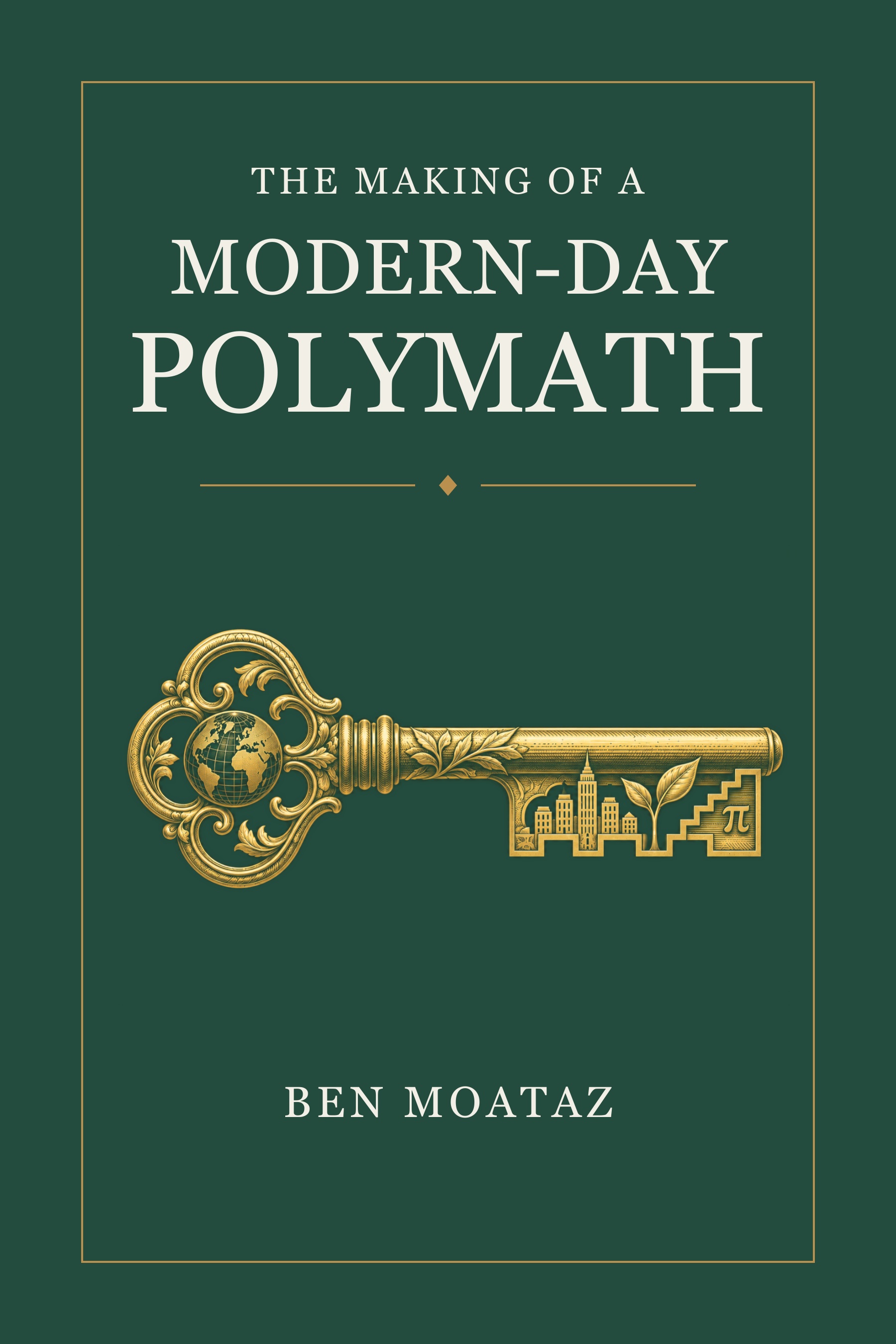
Inside the book
Across 25 chapters, Ben Moataz follows ideas from science and computing into art, language, and the things we learn by making and doing. A history of discovery and invention traces how better instruments make new questions possible. Practical prompts give you a way to try an idea for yourself.
-
Follow an idea across fields
See how Leonardo used a glass model to study flow through the aortic valve.
-
Notice what changes
Move a mark on a drawing and see what it does to the composition. Watch where the eggs begin to set as you make breakfast.
-
Give your curiosity a project
Start with something you want to make. Work out what you need to learn, then let the first attempt tell you what to study next.